Execution
How to do it.
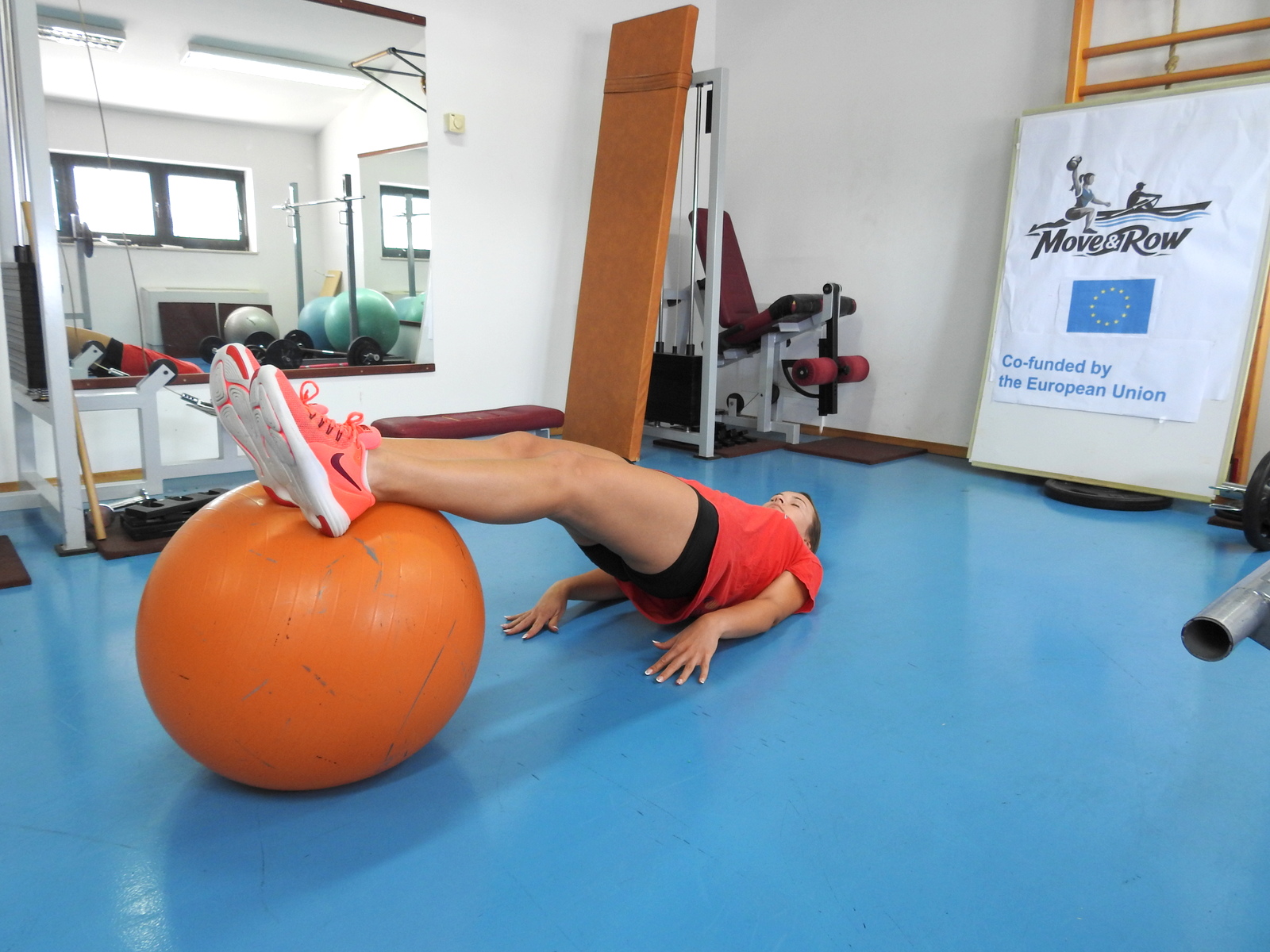
Initial phase
With the hips lifted off the ground, keep the trunk fully aligned from the shoulders to the feet. The head and shoulder blades remain on the floor while the legs stay extended, and both feet press into the physio ball to maintain a stable elevated bridge position.
Movement
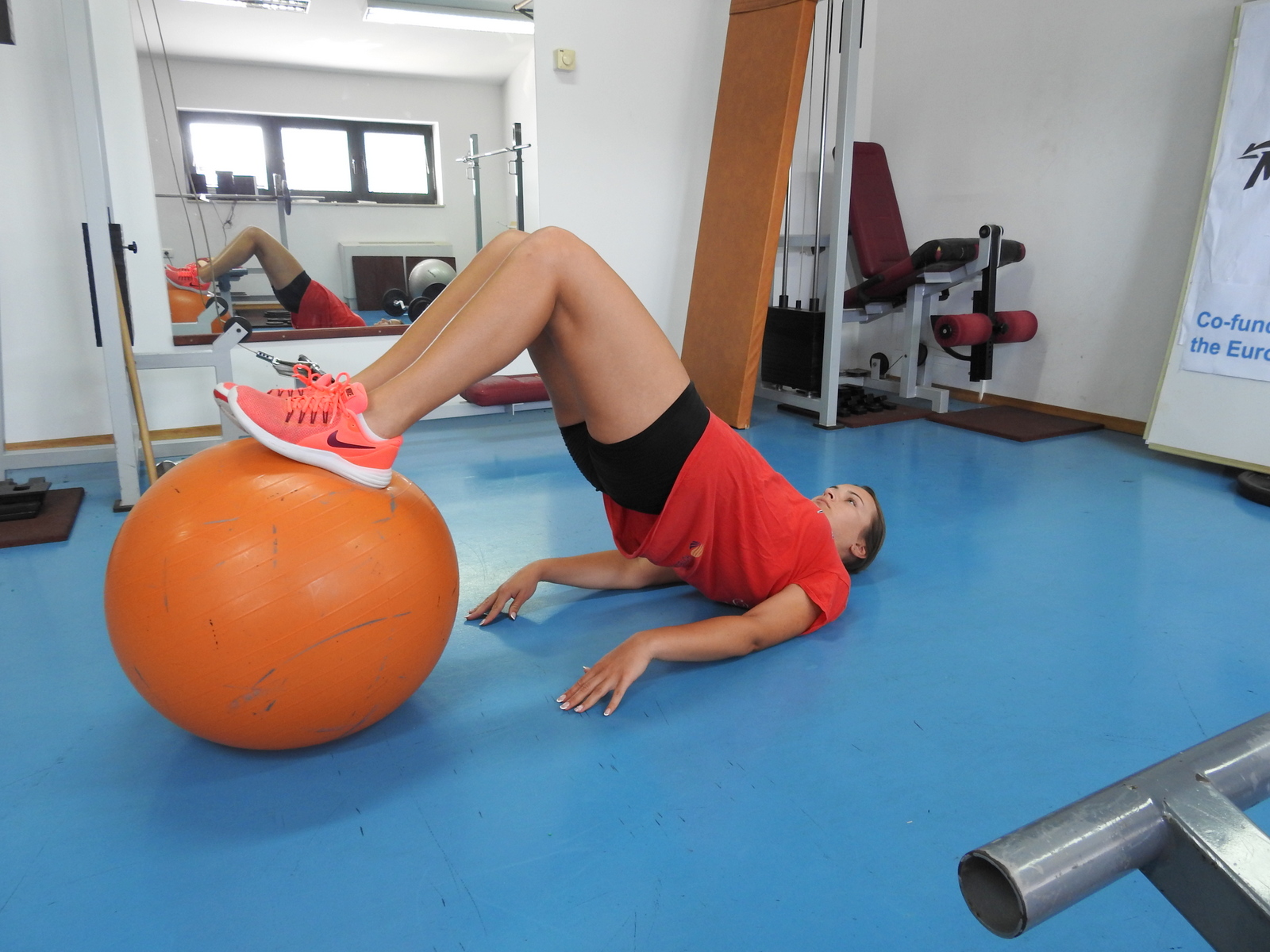
Keeping the hips fully extended, pull the physio ball toward you by driving the heels into it while maintaining a straight line from the shoulders through the hips to the knees. As the ball rolls closer, the hips lift even higher, preserving the aligned “shoulder–hip–knee” bridge position throughout the curl.
Final position
Keeping the hips lifted only as high as you can maintain correct alignment, continue pulling the ball toward you until the “shoulder–hip–knee” line stays straight and stable. Once you reach the highest position you can hold without the hips dropping, slowly extend the legs and roll the ball back to the starting position, making sure the hips do not fall downward during the return.
Progression
P1: Perform the curl with only one heel on the ball while the other leg stays extended. This drastically increases instability and forces the hamstrings and glutes to work much harder to keep the hips from dropping.
P2: Lift the arms off the ground or extend them overhead, removing upper‑body support. This increases the demand on trunk stabilization and makes it harder to maintain the correct hip‑lift alignment.
P3: Actively push the hips even higher at the end of the curl, increasing the glute activation and making the return phase more challenging without letting the hips fall.
Body positiion
Lying
4
Sets
12-15
Reps