Execution
How to do it.
Initial phase
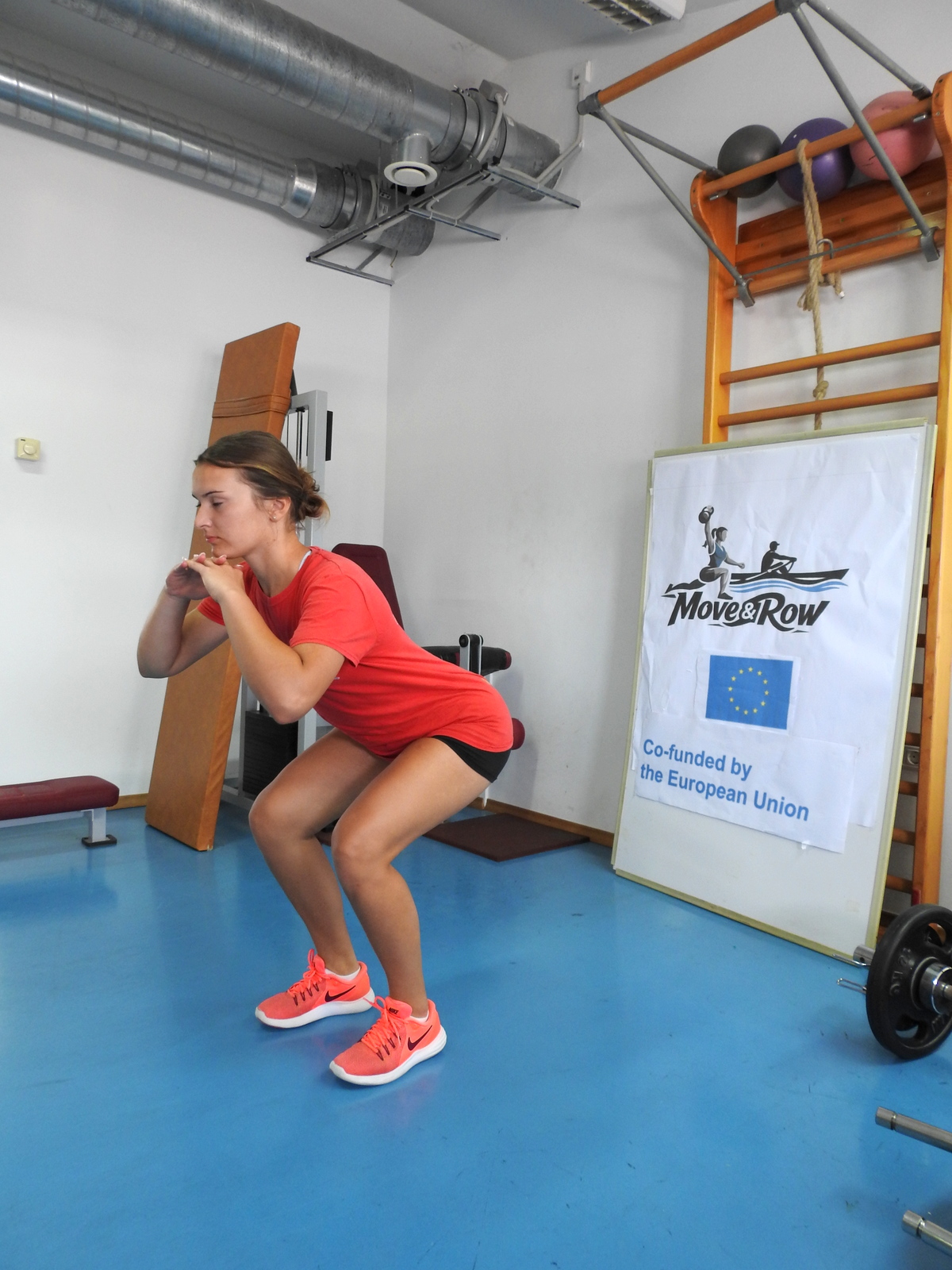
Stand upright with the body fully aligned and the feet placed at hip‑width. Keep the elbows flexed and hold the hands close to the chest, maintaining a stable posture and a neutral spine as you prepare for the movement.
Movement
Descend into a squat by flexing the knees and allowing the hips to move back while the trunk leans slightly forward in a controlled line. Keep the arms in the same position close to the chest and maintain a neutral, aligned torso throughout the movement so the posture stays stable as you reach the bottom of the squat.
Final position
When you reach the bottom of the squat with the thighs parallel to the floor, extend the left leg outward into a lateral reach as if initiating a side lunge. Keep the trunk aligned and the arms close to the chest while the leg moves away from the body. After the extension, draw the left leg back underneath you and rise from the squat in one controlled motion. Repeat the same sequence with the right leg to maintain symmetry and consistent technique.
Progression
“P1: Perform the movement with a deeper squat before initiating the lateral reach. By lowering the hips below parallel, the legs must generate more force to stabilize the position, and the trunk has to work harder to remain aligned as the extended leg moves outward and then returns underneath the body.
P2: Perform the entire sequence with a weight held overhead. Maintaining the load above the head increases shoulder involvement and requires continuous stabilization through the upper body and trunk. The elevated position of the weight challenges balance and forces stronger core control as you descend into the squat, extend the leg laterally, return it underneath you, and rise back to standing.”
Body positiion
Standing
4
Sets
12
Reps