Execution
How to do it.
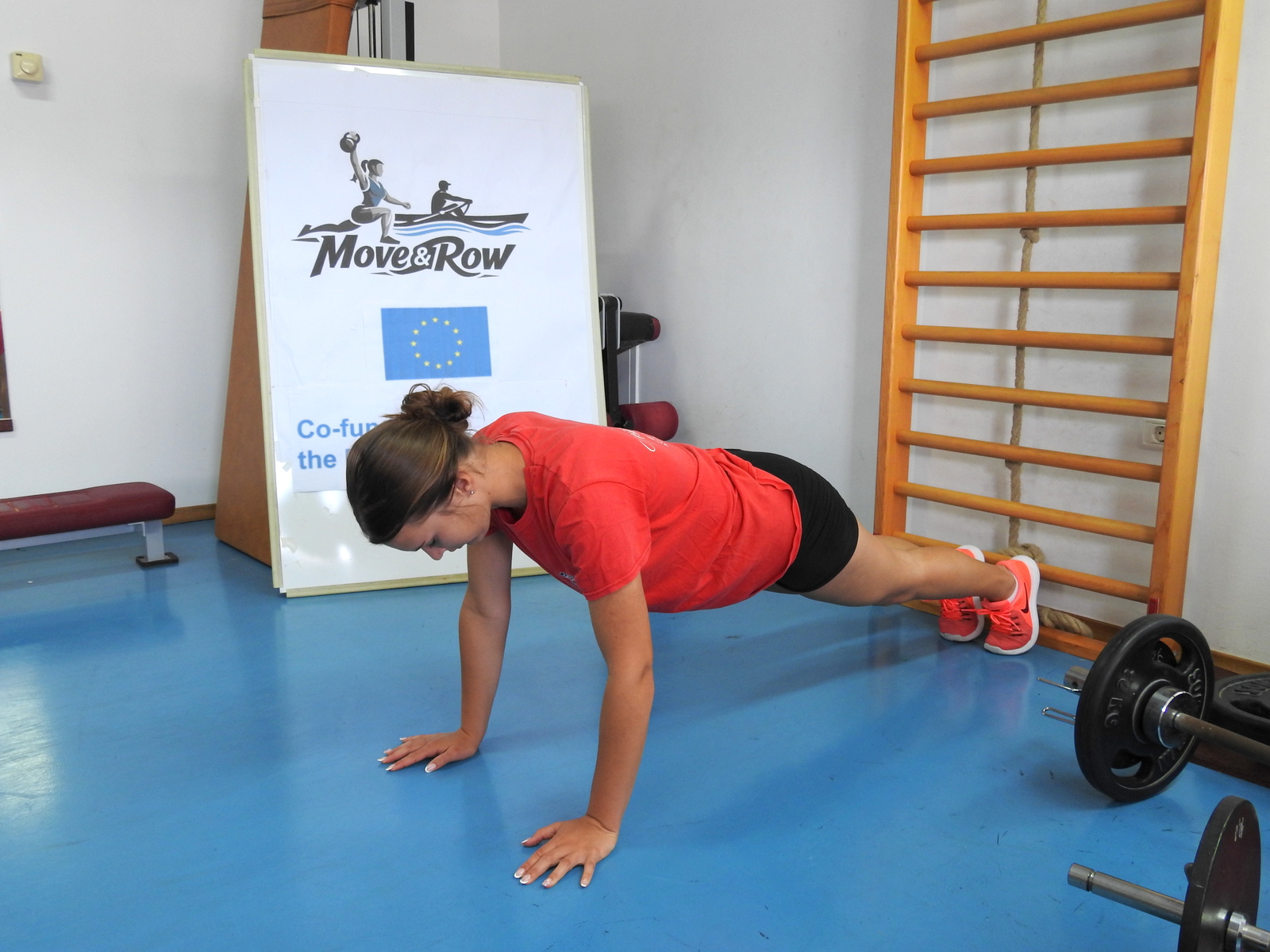
Initial phase
Hold the plank position with the body aligned from head to heels, keeping the arms fully extended and the wrists placed directly under the shoulders. Maintain a stable, neutral trunk while the feet rest against the stall bar to provide light support and consistent contact during the setup.
Movement
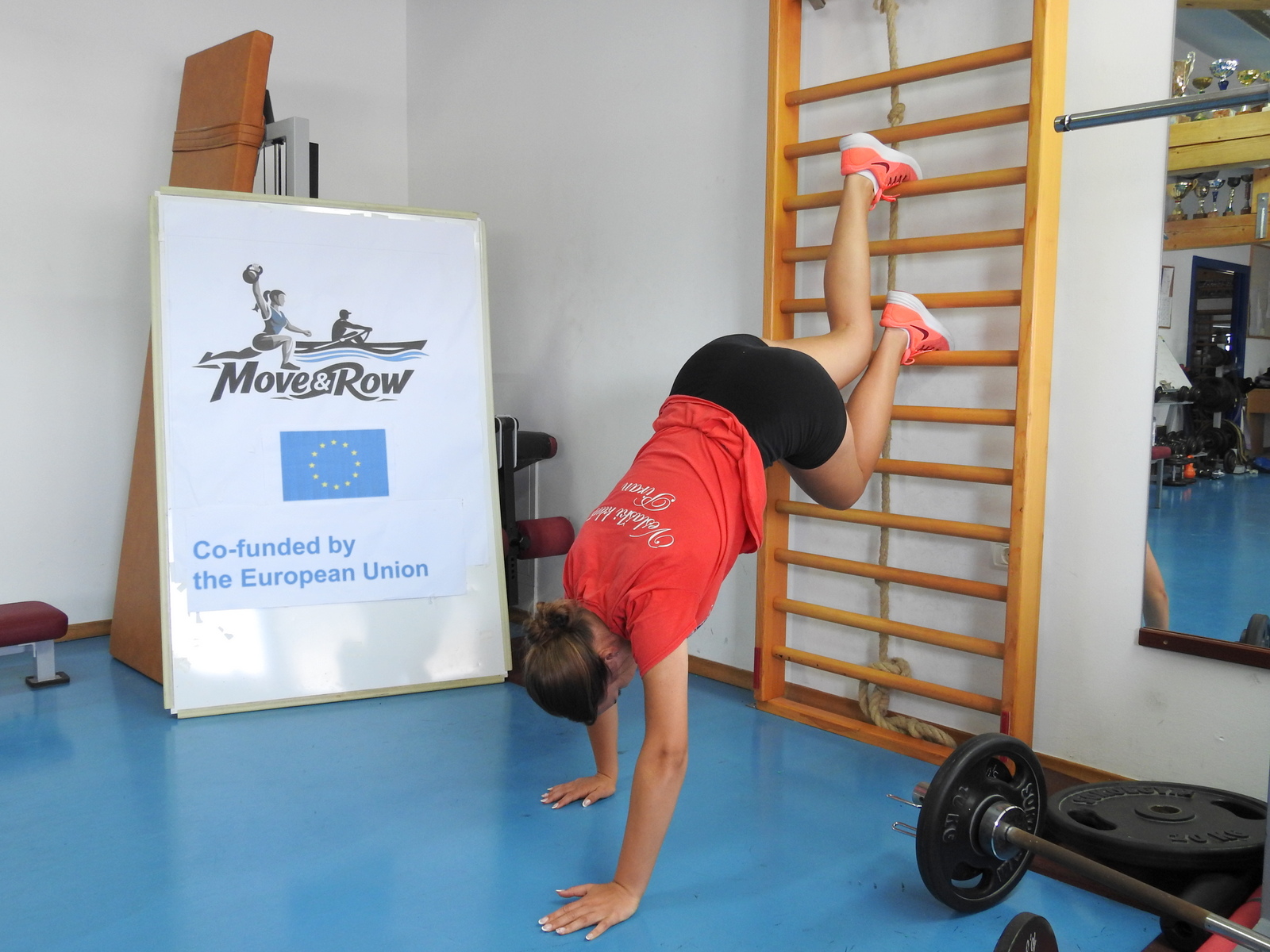
As you begin climbing with the feet, press them steadily higher along the stall bar while keeping the trunk long and aligned. The load shifts progressively onto the arms, so maintain firm shoulder stability and straight elbows. Let the torso follow the upward path of the legs without losing the plank line, keeping the hips controlled and the body moving as one unit.
Final position
You finish parallel to the stall bars with most of the load supported by the extended arms under the shoulders. The trunk remains aligned in a straight line, and the feet stay in contact with the stall bars only to assist balance in the top phase of the climb.
Progression
P1 — Static Plank (floor)
Hold the plank position with the body aligned from head to heels, arms fully extended, wrists under the shoulders. Goal: 30-45 sec stable hold with no hip sag.
P2 — Plank with Feet Elevated (feet on low box/bench)
Same alignment, feet resting on a 20-30cm platform. Begin shifting load toward the arms while keeping the trunk rigid.
P3 — Partial Pike Walk (feet on floor, hands walk back)
From the plank, hands walk backward toward the feet, lifting the hips into an inverted-V. Builds shoulder mobility and pressing strength.
P4 — Assisted Wall Walk (small climb)
Feet against the stall bar, climb 2-3 rungs while maintaining body alignment, then descend with control. Short reps, focus on holding the line.
P5 — Wall Walk to Half Height
Climb to roughly 45° (body halfway between plank and handstand), hands walking forward to accompany the legs’ ascent, elbows always locked.
P6 — Full Wall Walk to Vertical
Complete climb until parallel to the stall bars, feet in light contact only for balance, near-full load on extended arms.
P7 — Handstand Hold + Controlled Descent
Once in position, isometric hold for a few seconds, then slow descent retracing the progression in reverse.
One note: this exercise puts significant load on the shoulders, elbows, and forearms throughout the climb. Given your ongoing recovery from the distal biceps injury, I’d check with your physio before deciding which step (P1-P7) is safe to start from — P4-P6 especially, since that’s where the load on extended arms is highest.
Body positiion
Sitting
2
Sets
5
Reps