Execution
How to do it.
Initial phase
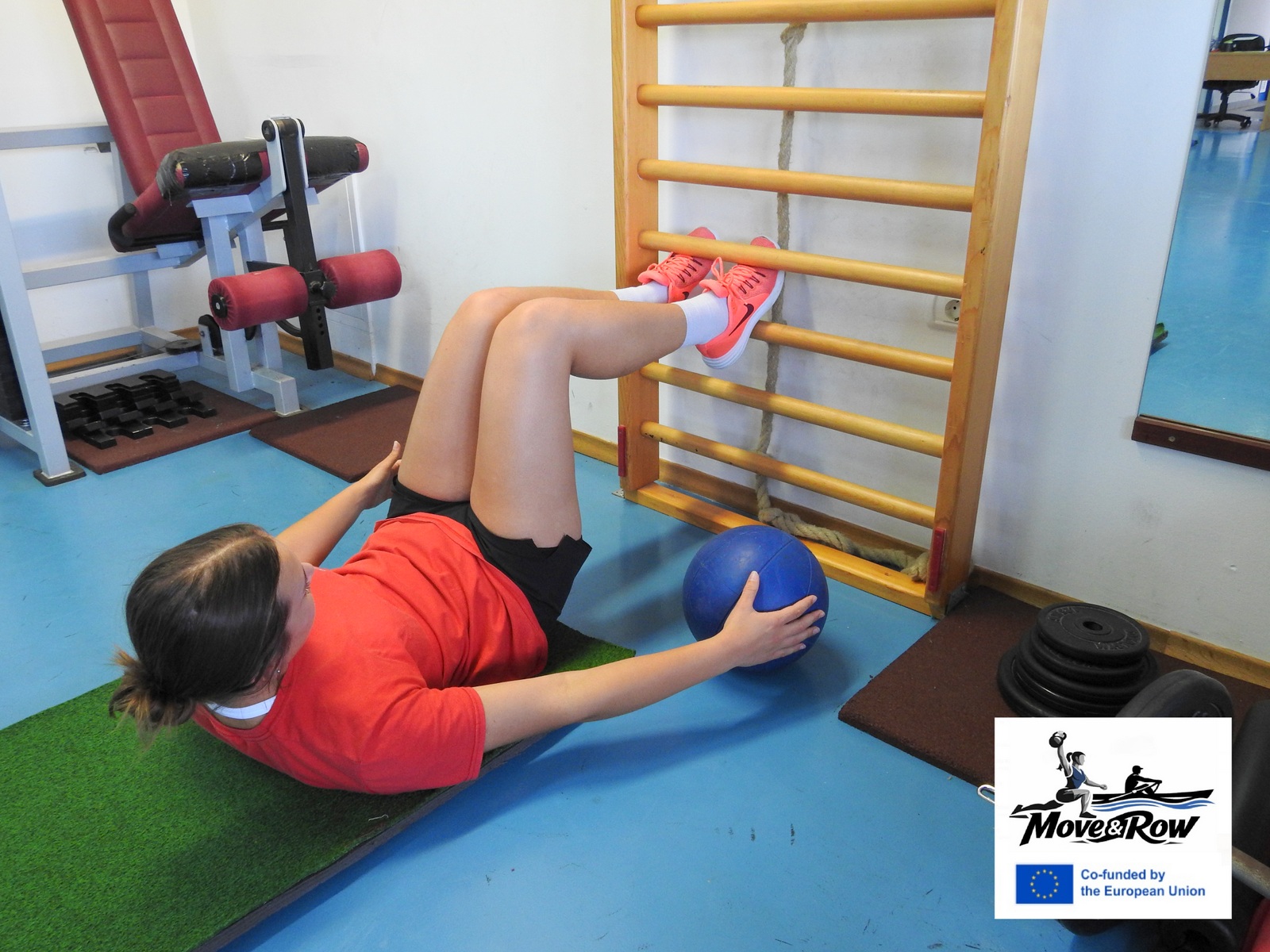
Lie on your back with the trunk engaged and the spine in a neutral, stable line. Bend the knees to 90 degrees and place the feet on the stall bars to create a firm, stable contact point. Position the arms alongside the body, with the medicine ball resting on the floor next to the right hip so the upper body remains relaxed and ready for the movement.
Movement
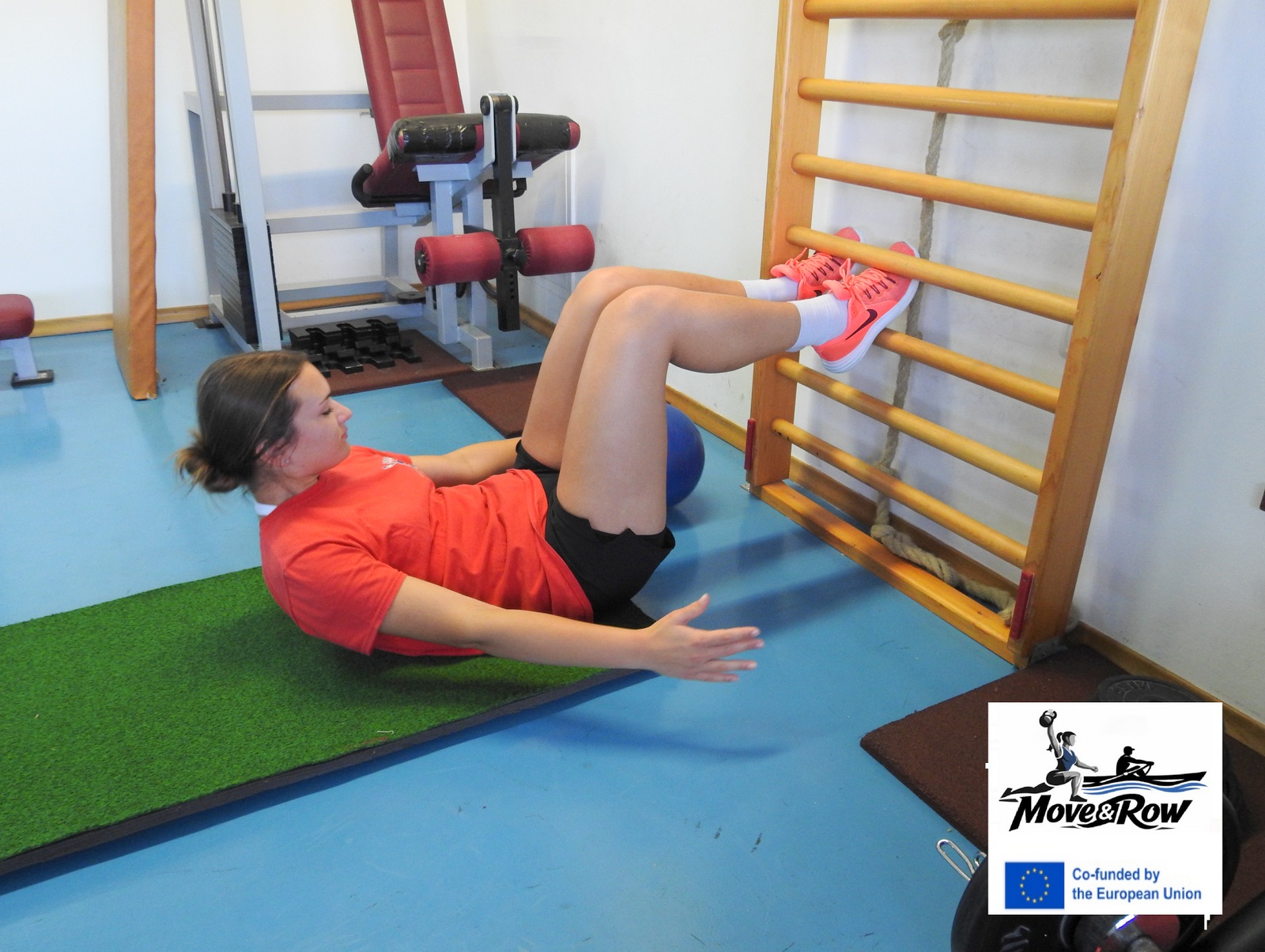
With the head and shoulder blades lifted off the ground, push the medicine ball from left to right underneath the legs while keeping the trunk engaged and the feet firmly positioned on the stall bars. Maintain a steady lift through the upper body so the movement comes from controlled rotation and reach rather than collapsing through the ribcage or hips. The ball should travel smoothly beneath the knees as you guide it from one side of the body to the other, keeping the motion precise and continuous.
Final Position
Maintain trunk engagement and stable foot contact on the stall bars so the final position matches the original setup, with the knees at 90 degrees, the arms by the sides and the ball resting at the left flank.
Progression
P1: Using a heavier medicine ball increases the resistance during the transfer under the legs, forcing stronger trunk stability while the head and shoulder blades remain lifted. A slam ball makes the task even harder because its higher friction prevents smooth rolling, demanding more precise arm control and greater rotational strength.
P2: Extending the knees and lifting the legs higher lengthens the lever, which significantly increases the load on the abdominal muscles during the movement. The elevated leg position requires stronger stabilization to keep the ball moving smoothly beneath the legs from one side to the other.
Body positiion
Lying
3
Sets
10
Reps