Execution
How to do it.
Initial phase
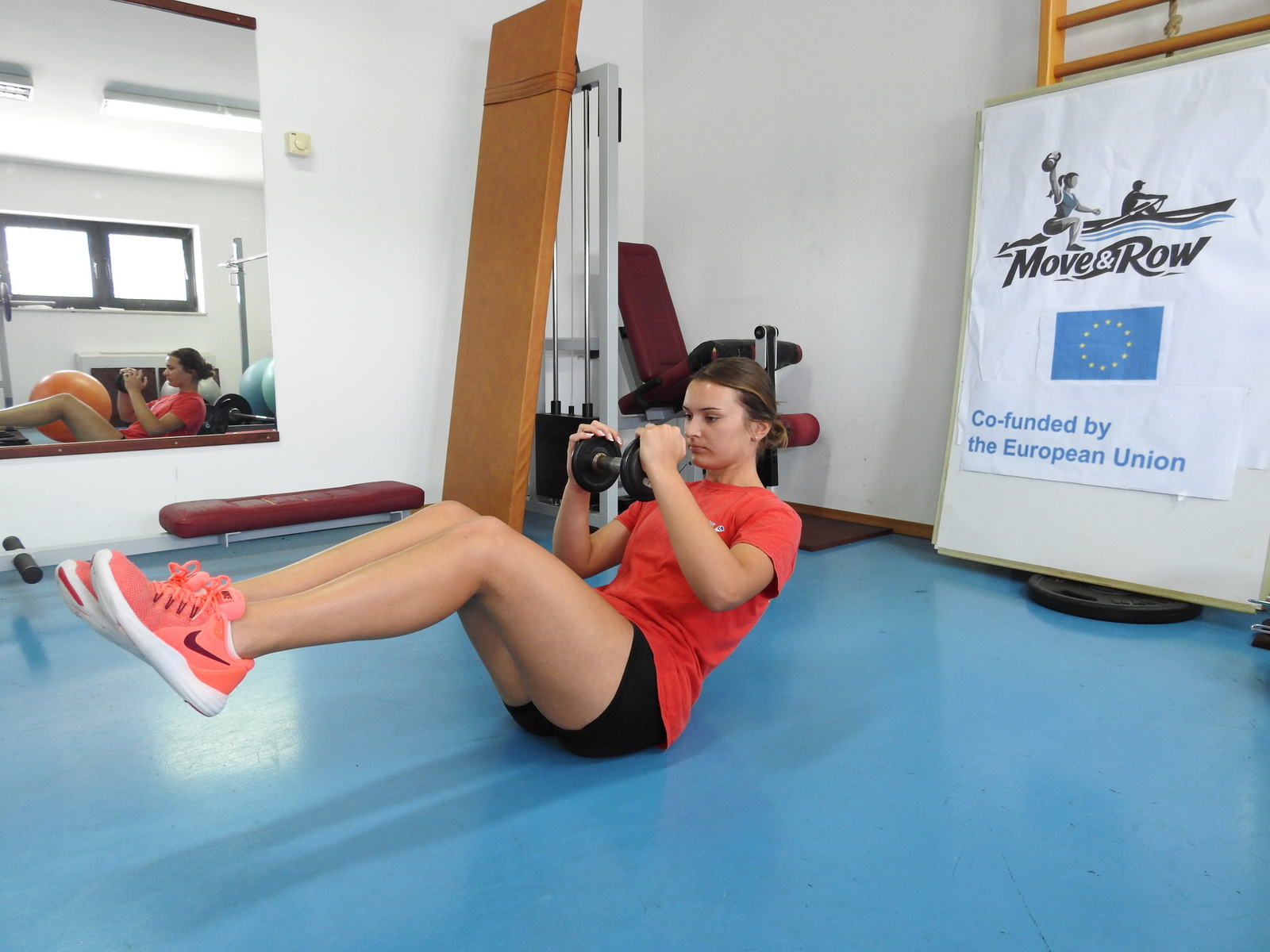
Sit upright with the torso slightly leaned back while maintaining a long, aligned spine. Keep both feet lifted off the floor with the knees bent, allowing the hips and core to stabilize the position. Hold a dumbbell above the chest with both elbows flexed, keeping the arms close to the body and the shoulders relaxed to ensure controlled support of the weight.
Movement
Move the dumbbell in a circular motion beneath the knees while keeping the torso steady and the legs lifted in the same bent position. Maintain a firm, aligned posture throughout the movement, ensuring that the rotation of the weight does not alter the angle of the hips, the position of the knees, or the lean of the upper body.
Final position
Finish the movement by guiding the dumbbell in a smooth arc beneath the legs and returning to the original balanced position with the torso leaned back and the feet lifted. Once stability is regained, repeat the circular motion in the opposite direction while keeping the trunk aligned and the legs steady throughout the transition.
Progression
P1: Sit with the torso leaned back and lift the feet, then extend the legs farther forward so the knees stay only slightly bent. Hold the dumbbell above the chest and circle it beneath the legs while keeping the trunk stable. The longer lever increases core load and makes the position harder to maintain.
P2: Sit in the same leaned‑back position with the feet lifted. Use a heavier dumbbell and move it slowly beneath the knees, controlling the full arc. The added weight and slower tempo increase rotational demand and force the core to stabilize the torso and legs more intensely.
Body positiion
Sitting
4
Sets
10
Reps