Execution
How to do it.
Initial phase
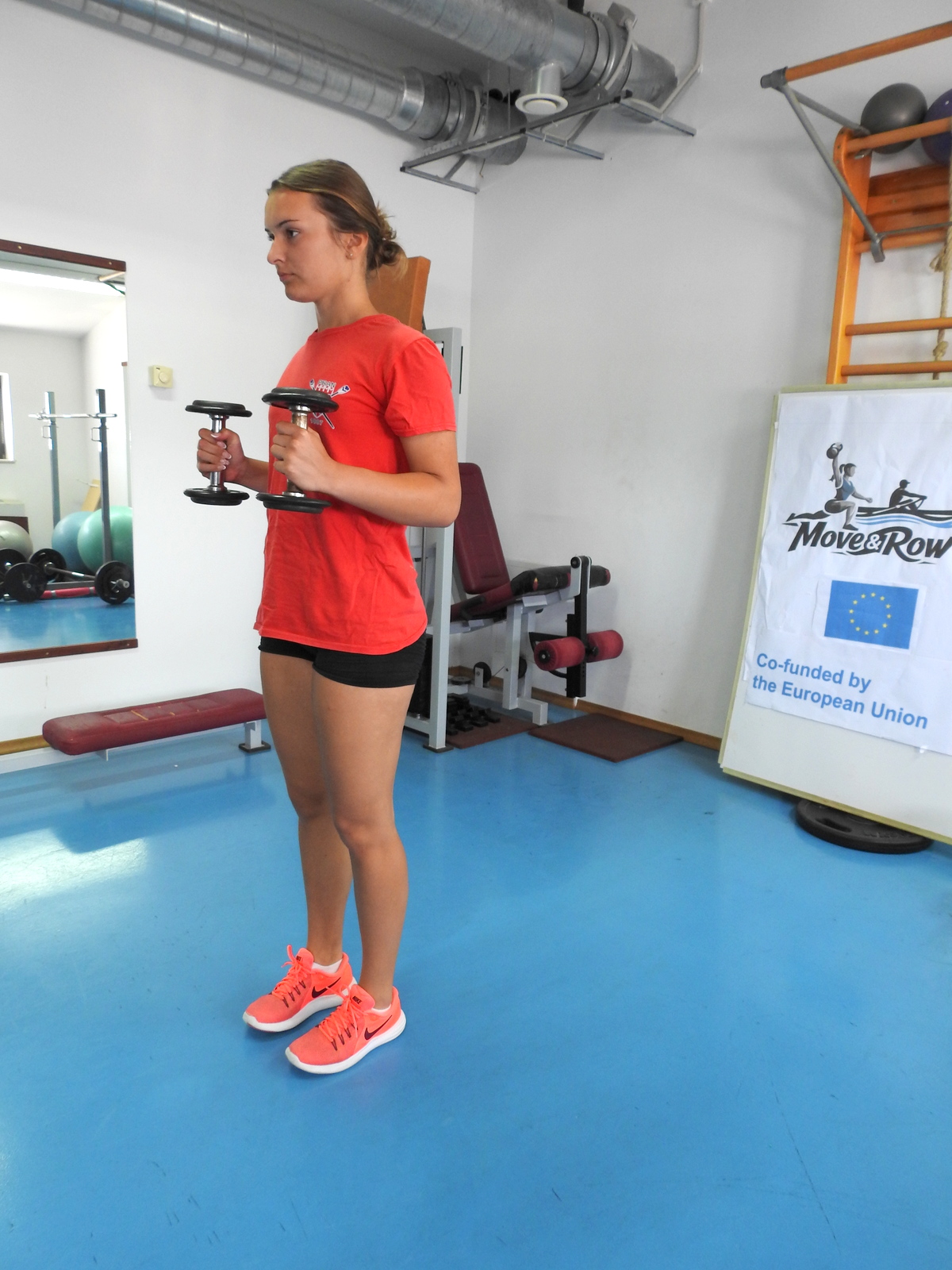
Stand with your feet at hip‑width and maintain an upright, stable posture. Hold a dumbbell in each hand with the elbows flexed to roughly ninety degrees, keeping the weights close to the torso without lifting the shoulders. Engage the abdominal muscles to stabilize the spine and keep the chest open before initiating the backward step.
Movement
Extend the left leg backward while keeping the knee slightly flexed to maintain balance. As the leg moves behind you, hinge the torso forward in a controlled motion, allowing the spine to stay long and stable. At the same time, straighten the left arm so the dumbbell reaches toward the floor. The right knee bends to support the shift in weight, and the right arm remains in the initial flexed position to help stabilize the upper body.
Final position
Return to the starting position by bringing the torso upright and stepping the left leg forward to regain a stable stance at hip‑width. Maintain control of the dumbbells as the arms come back to the initial flexed position. Once balance is re‑established, repeat the movement with the opposite leg and arm to ensure symmetrical execution on both sides.
Progression
P1: Add an additional stability challenge by lifting the opposite foot during each tap. Keeping the bear position stable, extend one arm forward to tap the object while simultaneously raising the opposite foot a few centimeters off the ground. This reduces the number of contact points and forces the core to work harder to prevent the hips from shifting as the hand reaches out and returns to the floor.
P2: More challenging option is to extend the tapping reach farther forward so the hand must travel beyond shoulder height. The longer lever increases the load on the supporting arm and forces the core to work harder to keep the hips steady as the hand returns to the floor.
Body positiion
Lying
3
Sets
10
Reps